Everyone brings wine and churchkhela home from Georgia. But it's the spices that stay in your kitchen longest after the trip: one jar of Svan salt turns plain potatoes into a dish you'll want to make again.
Below we cover the three essentials — Svan salt, Megrelian adjika and tkemali — what they are, what to eat them with and how to get them home.
Svan salt
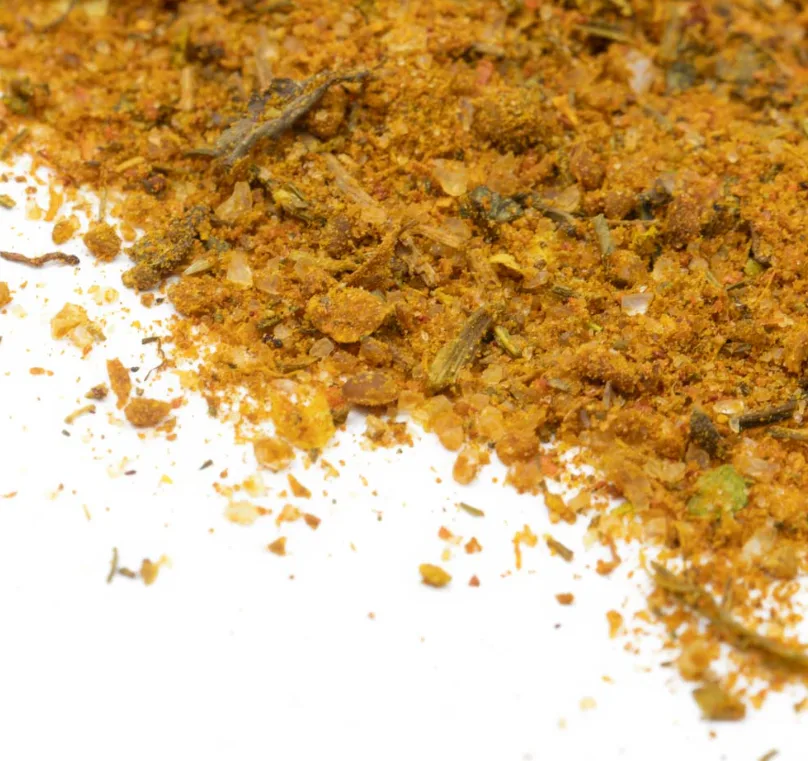
Svaneti, high in the mountains of northwestern Georgia, is where Svan salt comes from. It's coarse salt ground with garlic and spices, most often utskho suneli (blue fenugreek), coriander, caraway, red pepper, dill seed and Imeretian saffron. Every family has its own exact blend.
Try it with:
- new or baked potatoes;
- boiled eggs;
- tomatoes and cucumbers, instead of regular salt;
- meat and chicken before frying;
- bread and butter.
Important: this is salt itself, not a seasoning to add on top of salt. Use it on its own, or you'll oversalt the food.
We have Svan salt in our catalog. If you haven't tried it yet, start with this one.
Megrelian adjika
Samegrelo is a region in western Georgia on the Black Sea, and Megrelian cuisine is considered the spiciest in the country. Its adjika is a thick paste of hot red pepper, garlic, herbs and salt.
If you know adjika as a tomato sauce, this is something different. Georgian adjika usually has no tomatoes and is much hotter. Start with half a teaspoon.
Try it with:
- meat and chicken: brush with a mix of adjika and vegetable oil before roasting;
- mtsvadi: a thin layer on the hot meat;
- beans, stews and soups: just a little, on the tip of a knife;
- bread and butter, if you're brave.
Megrelian adjika is for those who like it hot.
Tkemali
Tkemali is a sour sauce made from the plum of the same name, known in English as cherry plum. It comes red or green, and its classic flavor comes from garlic, coriander and ombalo (pennyroyal).
Try it with:
- mtsvadi and any grilled meat: the classic pairing;
- potatoes, fries included;
- chicken and meat patties;
- pasta: people do this at home, though no restaurant will offer it to you.
Tkemali is one of the most common sauces in a Georgian home.
The same plum is used to make tklapi, a thin, sour fruit leather added to kharcho for tang. More on it in our article on churchkhela and tklapi.
If you need a gift
Three jars are great, but if you want a single ready-made gift, go for the Georgian spice gift box. The product page lists what's inside.
Three dishes for tonight
- Potatoes with Svan salt. Boil new potatoes in their skins, cut them in half, drizzle with oil and sprinkle with Svan salt.
- Chicken with adjika. Mix a spoonful of adjika with three spoonfuls of oil, rub it over the chicken and roast until done.
- Mtsvadi with tkemali. Grill the meat over charcoal with just salt, and serve the tkemali on the side. We explain how to plan this kind of picnic near Tbilisi in our article on barbecue picnics.
Getting them home
- Svan salt and dry spices can go in your carry-on.
- Adjika and tkemali are a paste and a sauce, so security treats them as liquids. Pack them in checked baggage: put them in a zip-lock bag and wrap them in clothes.
For more ideas on what to take home, see our article “What to bring back from Georgia as gifts”.
In short
- Svan salt is salt with garlic and spices. Use it instead of regular salt, not on top of it.
- Megrelian adjika is a hot paste of pepper and garlic, with no tomatoes. Start with half a spoonful.
- Tkemali is a sour plum sauce, a classic with mtsvadi and potatoes.
- Pack the salt in your carry-on, and the adjika and tkemali in checked baggage only.